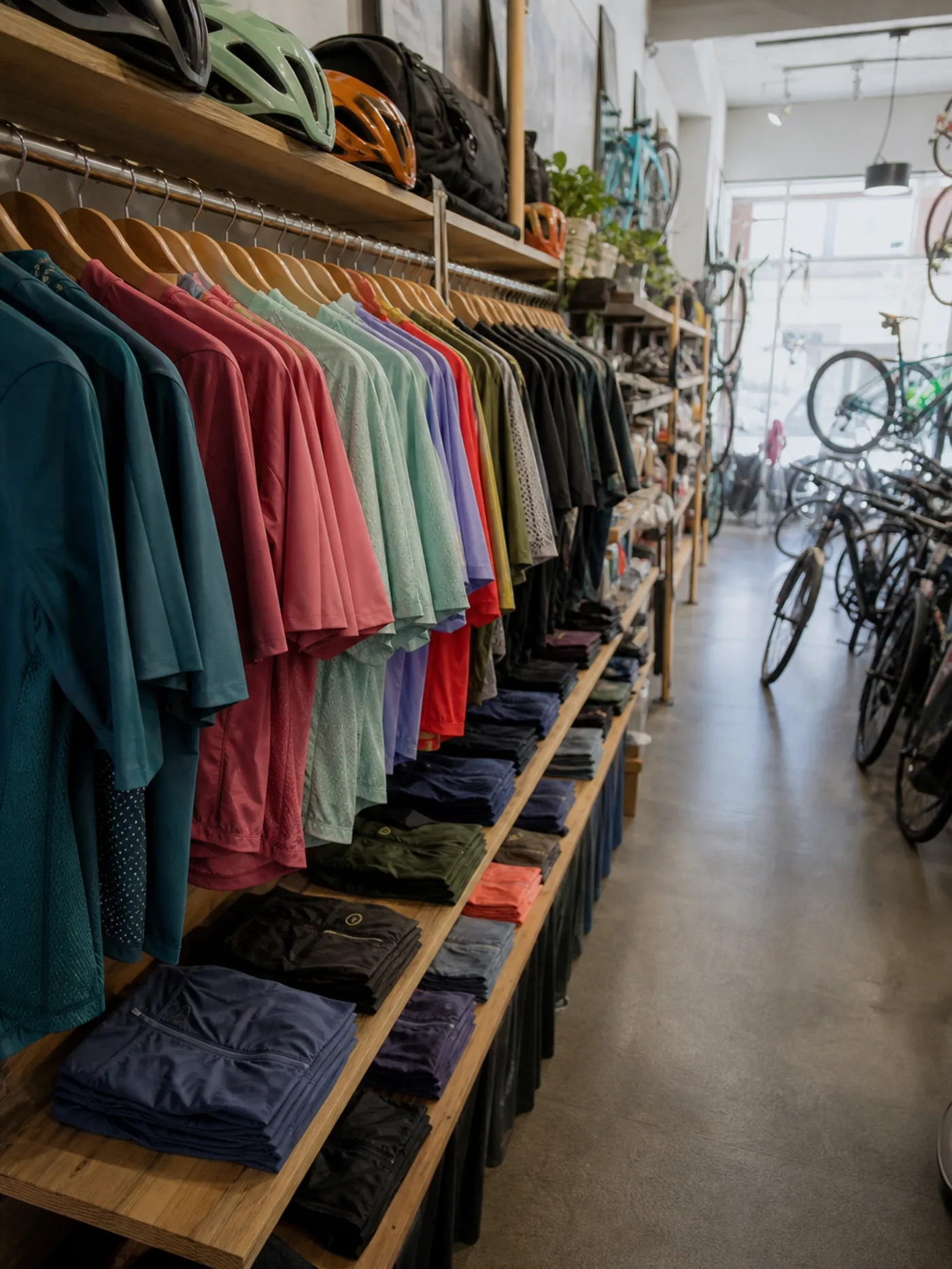
Cycling Apparel Suppliers for Shops Ready to Add a House-Brand Line
Already carrying wholesale stock and thinking about a self-branded SKU? See how a house-brand line runs alongside your main supply without competing with it.
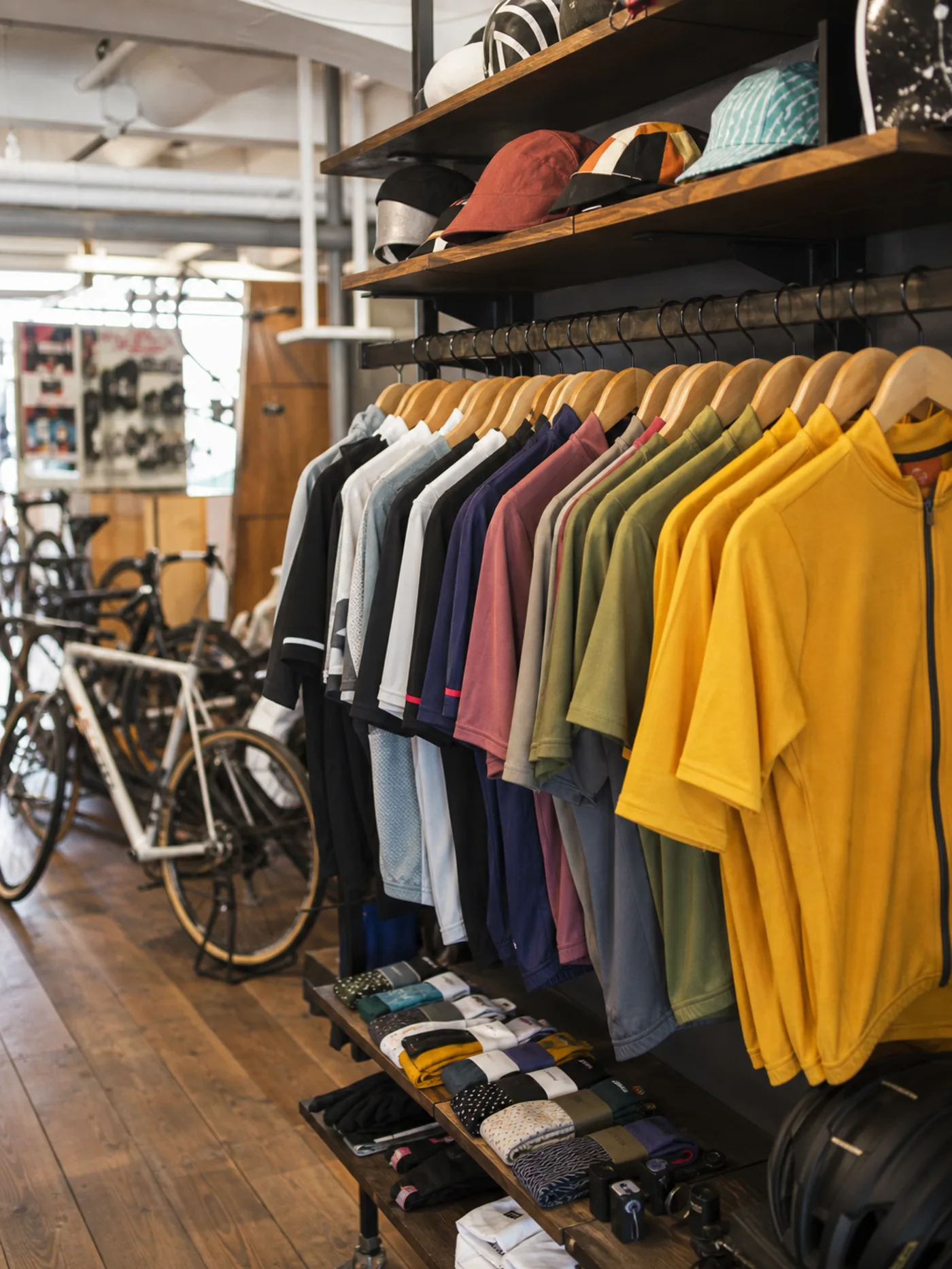
Full Line or Just a Store Label?
Two different levels of commitment — confirm which one you're looking at.
A Full Private-Label Line
If you want to build a real brand with its own development — fabric direction, chamois, a full SKU range — that crosses into private-label brand-building territory. Cycling brands and DTC startups is built around that path.
A Simple Store-Label SKU
If you want to add your store's own name to an existing garment offering without a full private-label build, that's what this page covers.
Why the Distinction Matters Before You Start
The two paths ask for a different level of commitment up front. A full private-label line means development decisions on fabric and fit before a single unit is produced. A store-label SKU starts from an existing garment offering, so the decisions are narrower — which item, which colors, how many — and the first order can be in motion faster. Neither is the wrong choice; the point of checking first is that the two pages ahead are written for different starting points, and reading the wrong one will leave gaps either way.
What a House-Brand SKU Typically Includes
The garments and decoration options most stores choose for a first house-brand run, and why.
Starting With One Item, Not a Range
A first house-brand SKU is almost always one item, not a range — a jersey or a cap carrying your store's mark, not a full kit line. Starting with a range multiplies every decision that comes later (how many colors per item, how much of each, when each one restocks) across every item at once, before you know whether the concept sells at all. One item answers that question once.
Why a Jersey or a Cap, Specifically
A jersey is the highest-visibility item a rider wears and photographs in, which makes it the item most likely to get noticed and asked about — useful if the goal is brand visibility on top of margin. A cap carries a lower unit cost and a simpler size range (usually one size, adjustable), which makes it the lower-risk starting point if the goal is testing whether customers respond to your store's own mark at all before committing to a garment with sizing complexity.
Matching Your Wholesale Look, or Deliberately Not
Some stores decorate a house-brand SKU to sit visually close to the wholesale lines they already carry, so it reads as part of the same shelf. Others deliberately make it look different, so customers recognize it as the store's own thing rather than mistaking it for another brand's product. Both are workable; the decoration placement and colorway choice are what carries that decision, not a different production process.
Decoration Applied to a Single-SKU Run
The same decoration methods used across the factory apply to a house-brand SKU at single-item scale. A store's mark is typically a smaller, simpler placement (chest or sleeve) than a full kit's sponsor layout, which keeps setup straightforward even at a small first-run quantity.
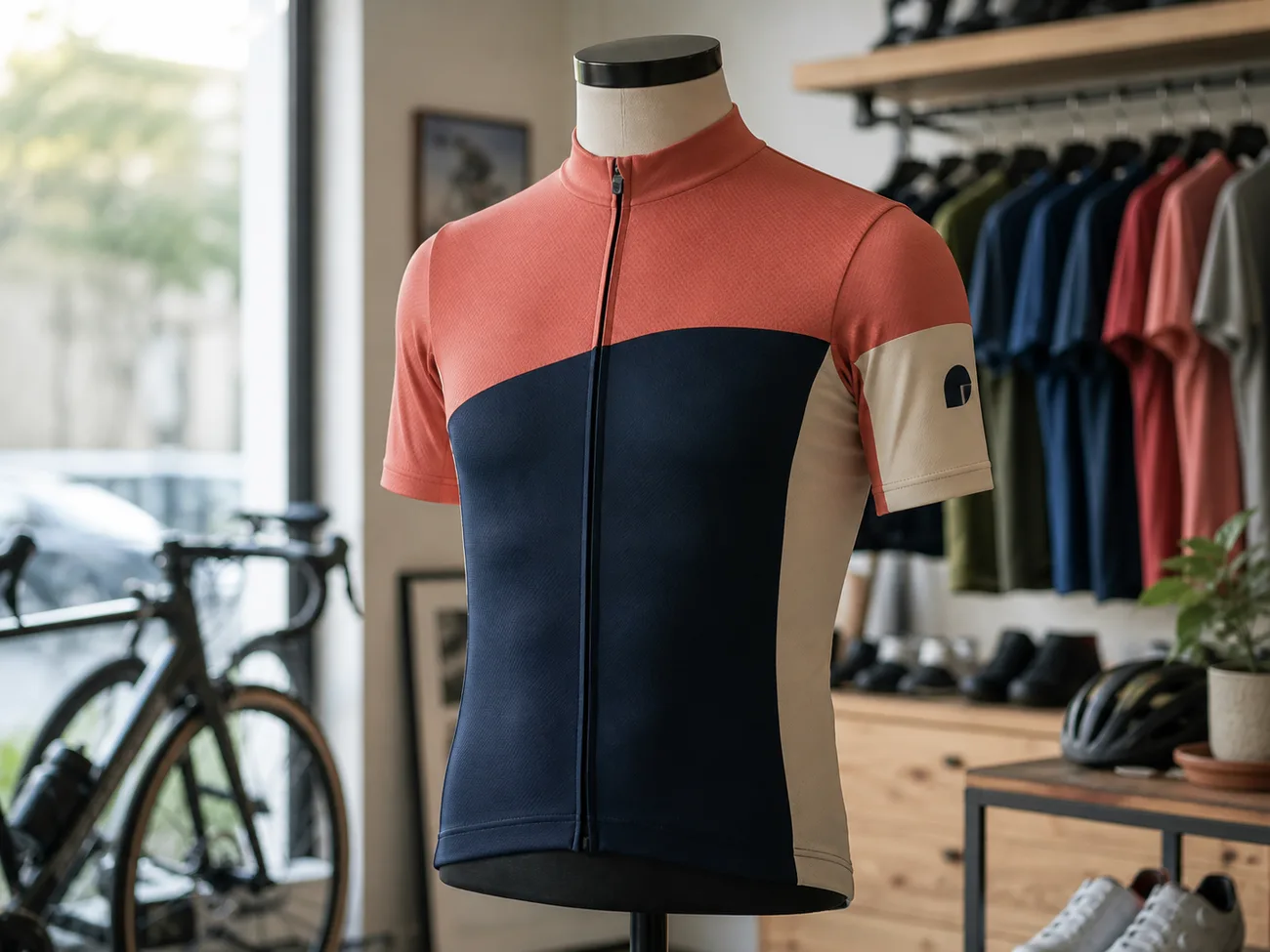
House-Brand Jersey
The higher-visibility starting item, worn and photographed on rides.
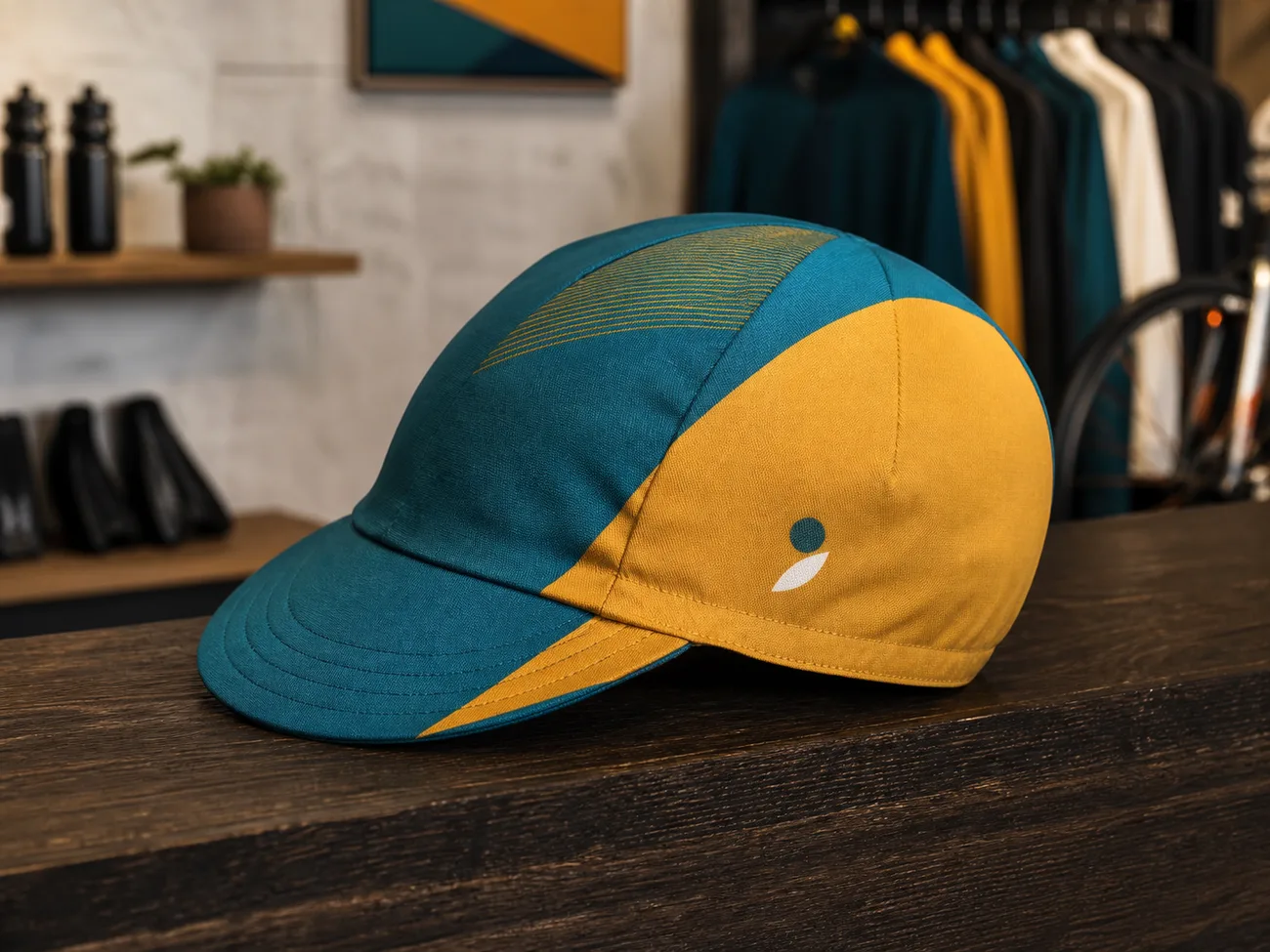
House-Brand Cap
Lower unit cost and a simpler size range — the lower-risk starting point.
Running Alongside Your Wholesale Stock
How a house-brand SKU stays separate from your main supply line in practice, not just in principle.
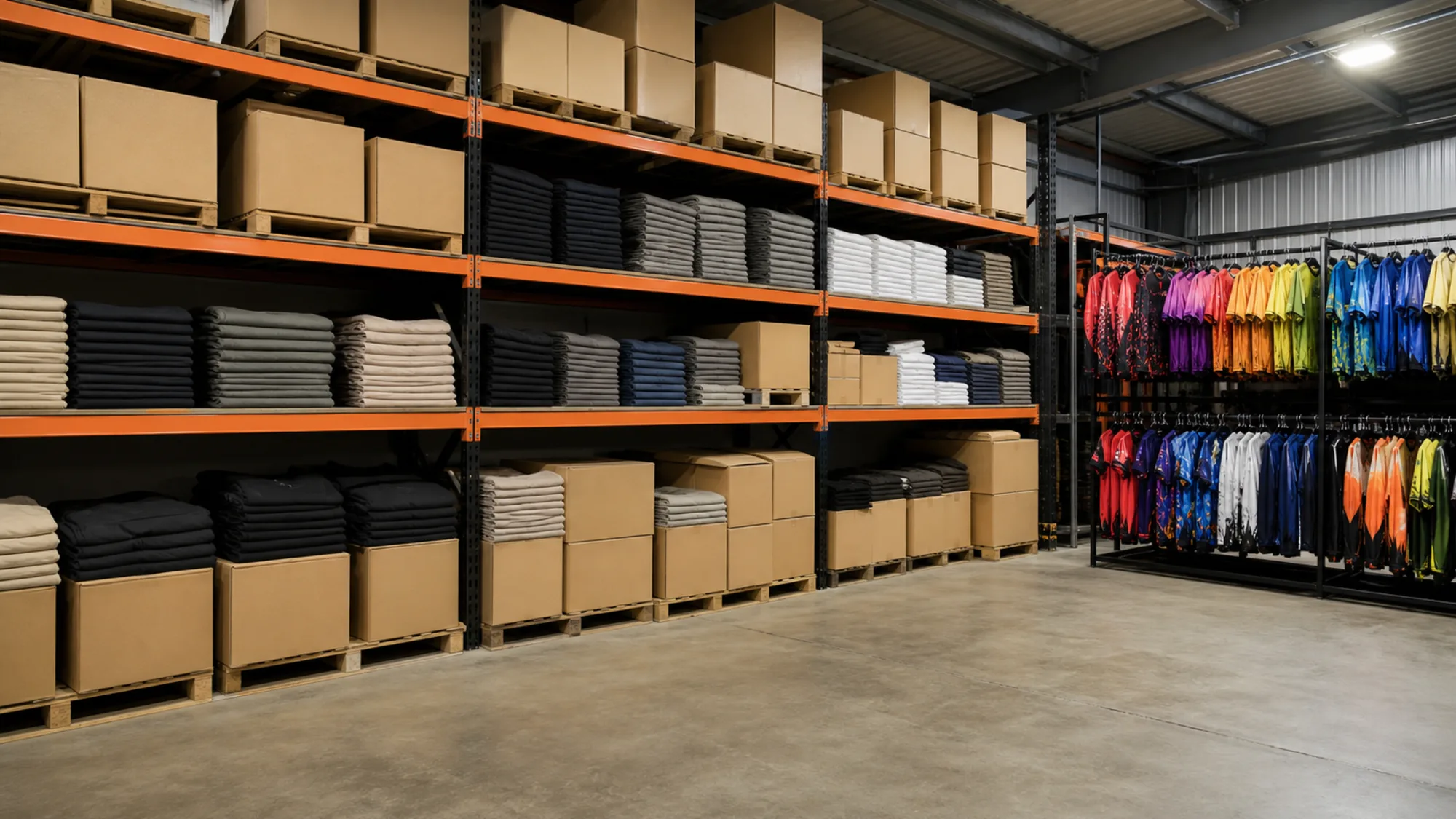
Wholesale Track
- Budget: regular purchase order, against known sell-through.
- Schedule: your regular restock cadence.
- Production slot: its own place in the queue.
House-Brand Track
- Budget: its own line item, never folded into the wholesale PO.
- Schedule: its own restock clock, watched separately.
- Production slot: a separate slot that never competes with wholesale.
A Separate Budget Line
A house-brand SKU is budgeted as its own line item, not folded into your regular wholesale purchase order. That matters because a wholesale reorder is a known, predictable cost against known sell-through; a house-brand SKU is a bet against unproven sell-through. Mixing the two budgets means a slow house-brand SKU can quietly eat into the cash you need for your proven wholesale reorders — keeping them separate is what stops that from happening without you noticing.
A Separate Production Slot
Your house-brand order and your wholesale order don't share a production slot on our side either. A delay or a change on one doesn't cascade into the other — updating your house-brand colorway doesn't push back your wholesale restock, and a wholesale reorder placed the same month doesn't compete with your house-brand run for capacity.
Where This Sits on the Private-Label Spectrum
A house-brand SKU is a private-label application, just a lighter one than a full brand build. The complete comparison between OEM, ODM, and private label — including how design ownership works — sits on OEM, ODM, and private label cycling apparel services; the point that matters here is narrower: your house-brand track runs independently of your wholesale track, on its own schedule and its own budget, whichever private-label path it technically falls under.
Restocking Before the Season Window Closes
Why a house-brand SKU needs its own restock clock, separate from your wholesale reorder point.
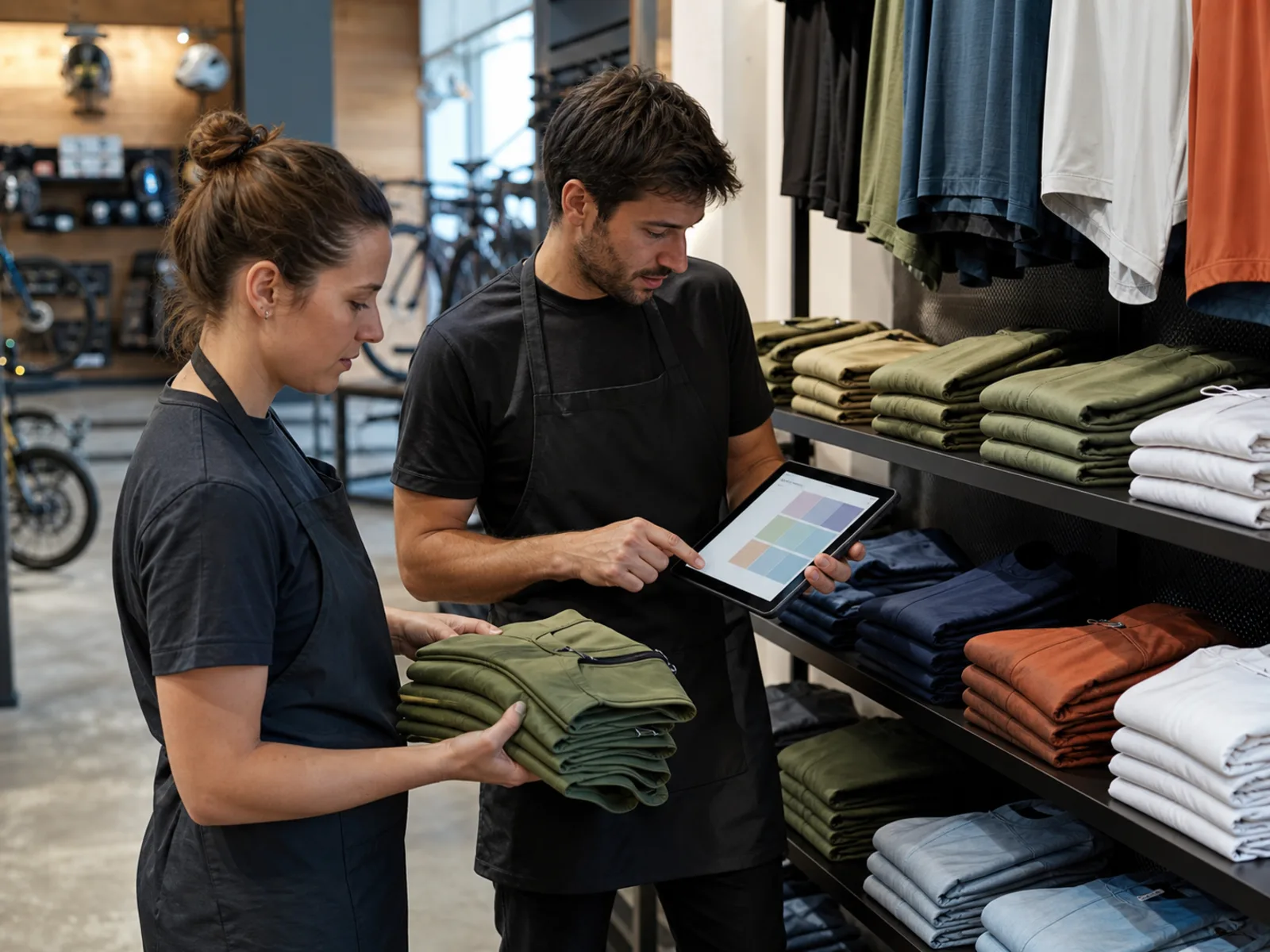
Two Restock Clocks, Not One
Your wholesale restock point is set by years of sell-through data — you know roughly when a color needs reordering before you're told. A house-brand SKU doesn't have that history yet, so its restock point has to be watched more closely in the early going: sell-through on a new SKU can move faster or slower than a wholesale item you already know.
Why the Same Reorder Date Is a Problem
If a house-brand restock and a wholesale restock land on the same date, both are asking for cash and warehouse attention at once — exactly the resource conflict described above. Watching the house-brand SKU's sell-through on its own timeline, rather than bundling its reorder decision with your regular wholesale cycle, is what keeps the two from colliding.
What Bulk Production Timing Means for the Reorder Date
Bulk production is covered in full on the homepage's Delivery & Scheduling section — 20–30 days, counted from sample sign-off. For a restock, the practical read is this: once a colorway's stock starts running low, the reorder needs to go in with enough runway ahead of your selling season that replacement stock lands before the shelf actually goes empty, not after. Waiting until a color is fully sold out to reorder is what turns a restock gap into a missed selling window — and because a house-brand SKU doesn't have your wholesale item's sales history to warn you early, that gap is easier to miss if you're not watching it on its own clock.
Known sell-through signals the reorder point
Regular restock cadence, on file
Stock lands before the shelf empties
Sell-through watched closely, no history yet
Own restock timeline, kept separate
Reorder timed off its own clock
Ready to Add Your First House-Brand SKU?
Talk Through Your First RunStart Conservative, Scale Only When It Sells
How many colors, how deep, and what happens if one of them doesn't move.
How Many Colors, How Deep
Two numbers decide how big a bet a house-brand SKU really is: how many colorways, and how many pieces of each. Both should be set by what your store can absorb if a colorway sells slowly, not by what you hope it does. A useful starting reference is your own wholesale sell-through: if your best wholesale color moves a certain quantity per month, a house-brand colorway with no sales history yet should start at a fraction of that pace, not match it — the whole point of starting conservative is that you don't have the data yet to know if it'll perform the same.
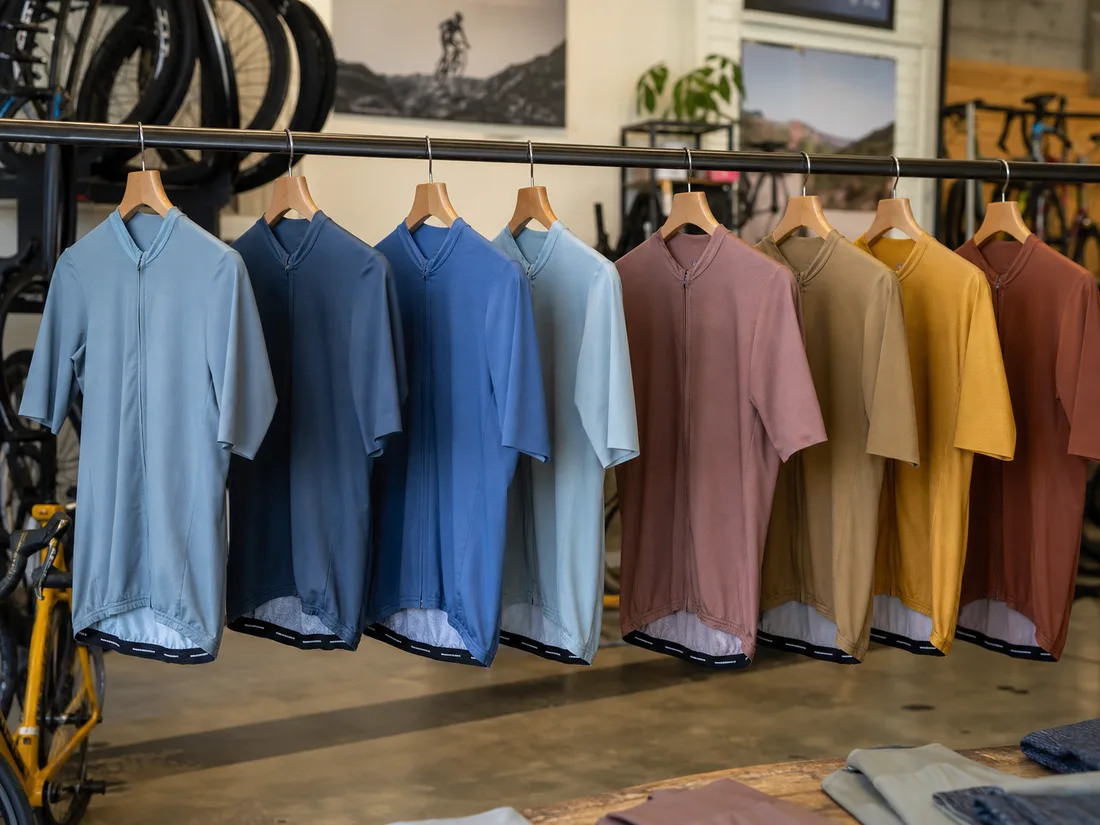
Conservative Start
A first house-brand run keeps colorway count and per-color quantity modest, tracked on its own budget line separate from wholesale — sized so a slow seller doesn't tie up meaningful cash or shelf space, and small enough that carrying it through a full season without a reorder is a real option, not a crisis.
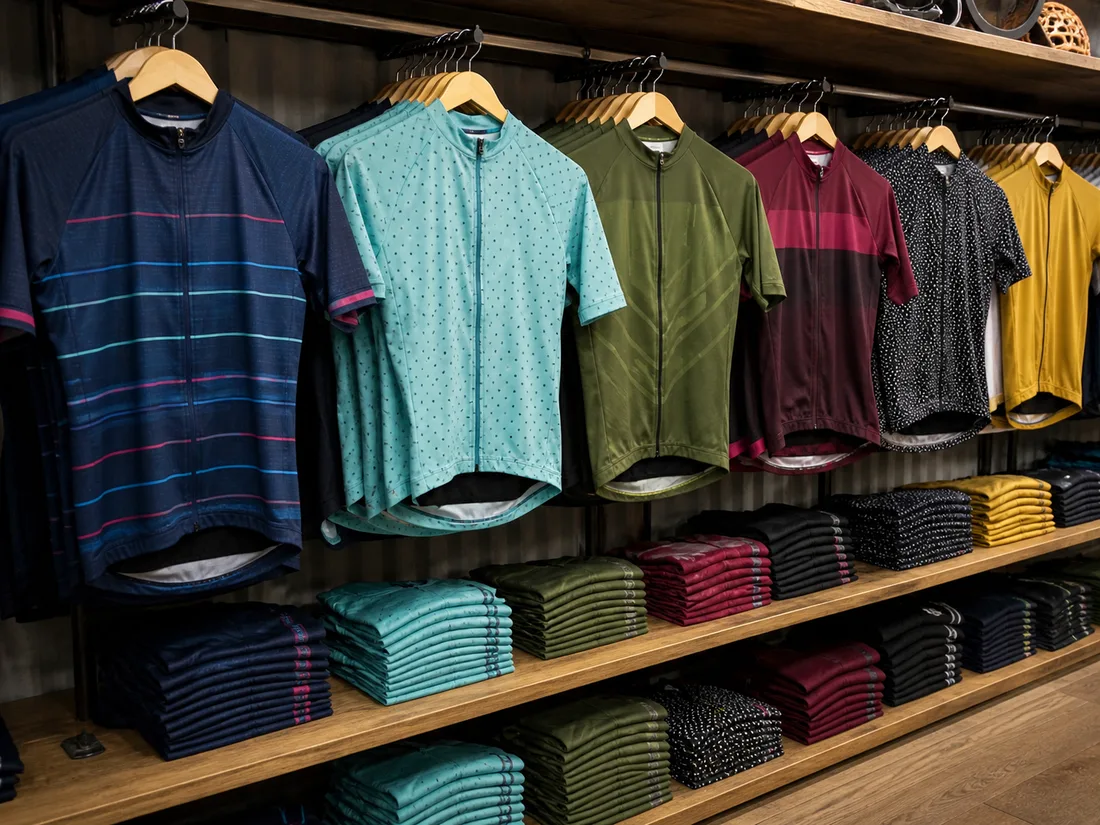
Scaled After It Proves Itself
Once a colorway has shown real sell-through — not a few pieces to friends and regulars, but ordinary retail sales over a full cycle — colorway count and per-color quantity can grow from there. Moving from the conservative state to the scaled state is a decision made after that evidence exists, not before it.
If a Colorway Doesn't Move
Not every colorway sells. If one doesn't, the response is straightforward: it isn't reordered, and it works down through your store's normal markdown or clearance practice like any other slow-moving item on your floor — there's no separate "house-brand failure" process to manage, because a conservative starting quantity means the amount left to work down was never large enough to force a bigger decision. What you do carry forward is the read on why it didn't move — wrong color, wrong price point, wrong shelf placement — into the next colorway you try.
A Retailer's First House-Brand Run
An Australian bike shop chain placed a joint order across 3 stores for a house-brand jersey, carried in 4 standing colors and restocked quarterly. The real store name is not shown; the program is described by scale and structure only.
How the range was actually set: the three stores placed one joint order rather than three separate smaller ones, which is what let the run clear the per-color minimum while still starting conservative — 4 standing colors, not a full wholesale-width range, the same starting-state logic described above.
Why quarterly restocking didn't collide with wholesale: the house-brand line was put on its own quarterly clock from the start, separate from each store's wholesale reorder dates — the same two-clock separation described above. That's the reason a joint 3-store order never had to compete with wholesale stock for the same production slot.
No company name is shown; the program is described by buyer type, scale, and structure only.
Questions From Bike Shop and Retail Buyers
The questions that come up most from stores adding a house-brand SKU.
Start the Conversation
One form, four fields, for your first house-brand SKU.